Tuesday, July 4, 2023
Monday, July 3, 2023
The Miracle of Sexual Reproduction
One of the most difficult things to explain in biology is the appearance of sexual reproduction. Lots of organisms reproduce asexually and they do just fine, so why did such a complex process as sexual reproduction arise and how did it come about through purely natural processes?
In order to reproduce sexually an organism has to, inter alia, develop meiosis, it has to develop an entire suite of hormones, organs and anatomical structures, and it has to develop behaviors that trigger hormonal responses in its potential mates.
To catch a glimpse of the sheer complexity of just one aspect of this astonishing means of reproduction watch this marvelous five minute animation of mammalian (human) fertilization and consider all of the engineering that had to go into designing this process. Then ask yourself what the chances are of such a phenomenon being produced by mindless, blind and purposeless coincidence.
If any of the numerous structures or complex chemical reactions in this process failed to develop fertilization would either be impossible or exceedingly less likely.
Any naturalistic account of the evolution of this phenomenon would be indistinguishable from a miracle, but since naturalism excludes miracles the appearance of sexual reproduction is, for the naturalist, a mystery. On the other hand, the alternative to naturalism, theism, explains the appearance of sexual reproduction as the consequence of the purposeful action of an intelligent agent who designed this process with goals in mind.
When we watch the video it certainly seems that everything that occurs in the fertilization of a human ovum is goal-directed, purposeful and extraordinarily improbable on the naturalistic assumption that its evolution was a fortuitous accident.
For a fuller explanation of the content covered by the video check out this piece at Evolution News.
In order to reproduce sexually an organism has to, inter alia, develop meiosis, it has to develop an entire suite of hormones, organs and anatomical structures, and it has to develop behaviors that trigger hormonal responses in its potential mates.
To catch a glimpse of the sheer complexity of just one aspect of this astonishing means of reproduction watch this marvelous five minute animation of mammalian (human) fertilization and consider all of the engineering that had to go into designing this process. Then ask yourself what the chances are of such a phenomenon being produced by mindless, blind and purposeless coincidence.
If any of the numerous structures or complex chemical reactions in this process failed to develop fertilization would either be impossible or exceedingly less likely.
Any naturalistic account of the evolution of this phenomenon would be indistinguishable from a miracle, but since naturalism excludes miracles the appearance of sexual reproduction is, for the naturalist, a mystery. On the other hand, the alternative to naturalism, theism, explains the appearance of sexual reproduction as the consequence of the purposeful action of an intelligent agent who designed this process with goals in mind.
When we watch the video it certainly seems that everything that occurs in the fertilization of a human ovum is goal-directed, purposeful and extraordinarily improbable on the naturalistic assumption that its evolution was a fortuitous accident.
For a fuller explanation of the content covered by the video check out this piece at Evolution News.


Saturday, July 1, 2023
A Step Toward the Color-blind Ideal
The Supreme Court's decision to rule in favor of Students For Fair Admission (SFFA v. Harvard) and end the practice of affirmative action in college admissions has produced a ton of commentary on both left and right. The left thinks it's a terrible decision and the right thinks it's long overdue.
I agree with the latter. Here are two quick thoughts on the ruling:
First, it seems to me that anyone who thinks that affirmative action should be maintained in perpetuity is implicitly saying that, in their opinion, black and Hispanic students simply can't compete intellectually with whites and Asians, which itself seems to be a racist point of view.
It may be that in some cases some black students are suffering the residual effects of Jim Crow and the consequent difficulties their ancestors faced in trying to accumulate wealth, but why does that justify discriminating against Asian students whose parents and grandparents arrived on these shores with nothing but the clothes they were wearing.
And if dire economic conditions faced by one's ancestors explain why blacks underperform academically why do first generation Asian students consistently finish at the top of their high school classes.
Moreover, affirmative action is itself a form of racism since it bases benefits on skin color to the detriment of those who are not black. In a society in which the ideal is equal treatment under the law it's past time for it to go.
Second, it's the role of the Supreme Court to evaluate cases which come before it according to their conformity to or compatibility with the Constitution. It's peculiar that in so many of the dissenting opinions, both from the Court's minority as well as media types, both in last year's Dobbs ruling and this year's cases, there's rarely, if ever, any mention of the Constitution.
In other words, objections to the majority's decision seems to be based largely, if not exclusively, on the subjective preferences of those who oppose it, but subjective preference has no place in the Supreme Court's decisions. If the Court's ruling cannot be assailed on Constitutional grounds then there simply are no dispositive arguments to be made against it.
Colleges and universities should admit students the same way their basketball and football teams select athletes - according to their merit. Other factors like economic disadvantage, etc. can certainly be factored in to the admissions process, but there's no reason why these other factors can't be color-blind.
It's fashionable on the left to deride the ideal of a color-blind society, but unless we learn to look past color we'll continue to fragment and balkanize. Social cohesion is incompatible with identity politics.
I agree with the latter. Here are two quick thoughts on the ruling:
First, it seems to me that anyone who thinks that affirmative action should be maintained in perpetuity is implicitly saying that, in their opinion, black and Hispanic students simply can't compete intellectually with whites and Asians, which itself seems to be a racist point of view.
It may be that in some cases some black students are suffering the residual effects of Jim Crow and the consequent difficulties their ancestors faced in trying to accumulate wealth, but why does that justify discriminating against Asian students whose parents and grandparents arrived on these shores with nothing but the clothes they were wearing.
And if dire economic conditions faced by one's ancestors explain why blacks underperform academically why do first generation Asian students consistently finish at the top of their high school classes.
Moreover, affirmative action is itself a form of racism since it bases benefits on skin color to the detriment of those who are not black. In a society in which the ideal is equal treatment under the law it's past time for it to go.
Second, it's the role of the Supreme Court to evaluate cases which come before it according to their conformity to or compatibility with the Constitution. It's peculiar that in so many of the dissenting opinions, both from the Court's minority as well as media types, both in last year's Dobbs ruling and this year's cases, there's rarely, if ever, any mention of the Constitution.
In other words, objections to the majority's decision seems to be based largely, if not exclusively, on the subjective preferences of those who oppose it, but subjective preference has no place in the Supreme Court's decisions. If the Court's ruling cannot be assailed on Constitutional grounds then there simply are no dispositive arguments to be made against it.
Colleges and universities should admit students the same way their basketball and football teams select athletes - according to their merit. Other factors like economic disadvantage, etc. can certainly be factored in to the admissions process, but there's no reason why these other factors can't be color-blind.
It's fashionable on the left to deride the ideal of a color-blind society, but unless we learn to look past color we'll continue to fragment and balkanize. Social cohesion is incompatible with identity politics.
Friday, June 30, 2023
The Cost of Mitigating the Effects of Global Warming
Bjorn Lomberg is a social scientist who focuses on the economics of climate change. He acknowledges that global warming is real, that it's to some extent anthropogenic (man-made) and constitutes a serious problem, but he's skeptical about much else that we read in the media and hear from certain scientists about the problem.
Imprimis, a free-subscription publication of Hillsdale College, recently ran a piece by Lomberg based on a speech he gave for the college in which he challenged a number of popular beliefs about climate change.
For instance,
In addressing climate change there are two costs we must consider - the cost to our society incurred by the damage produced by climate effects and the cost incurred by attempts to mitigate them.
For example, the Biden administration has declared a goal of "net zero" in carbon emissions by 2050, but it's highly unlikely that could ever be achieved given the exorbitant economic burden that would impose on the country. To realize just a 20% reduction in carbon emissions would cost each American $75 per person ($300 for a family of four) per year.
A 40% reduction would cost about $500 per person annually, a 60% reduction would cost $2000 per person per year, and an 80% reduction would mean that each person would be assessed $5000 each year. To get to 95% reduction of carbon emissions would cost each person about $11,000 every year - $44,000 every year for a family of four.
It's not surprising that those who promote "net zero" don't mention the costs involved.
But what's the cost of climate disasters relative to the cost of policies to mitigate them?
The worst case scenario for global warming, assuming we do nothing to prevent it, is a 7.4 degree (Fahrenheit) rise in global mean temperature by 2100. Such an increase would result in a decline of 4% in global GDP, but at the same time the OECD, World Bank and several other organizations project an increase in the wealth of the average person by 450 percent. Thus, if nothing was done to mitigate the effects of global warming and the worst case scenario came to pass the average person would still be much better off.
In dollar amounts the economic cost of doing nothing would be about $140 trillion. If we undertake efforts to mitigate the harm and reduce the temperature increase from 7.4 degrees to 5.3 degrees, the economic damage done as a result of the higher temperatures would still be about $110 trillion, but the cost of efforts to keep the increase to 5.3 degrees, assuming that China, India and Africa all participate, would be about $100 trillion.
In other words, the cost of keeping the global temperature increase to below 5.3 degrees is equal to or greater than the cost of the harm that such an increase would entail.
The sweet spot appears to be an increase of 6.75 degrees. This would produce economic damages in the neighborhood of $110 trillion, and to keep the increase from exceeding this value would cost the nations of the world about $20 trillion.
Mr. Biden's "net zero" is economically unrealistic. Limiting temperature rise to 3.9 degrees would still result in about $50 trillion in economic damage, but would cost almost $400 trillion to achieve.
These calculations demonstrate why the Paris Climate Accords are such a dumb deal and why President Trump was wise to withdraw from them. Even if all signatories, including China and India, do as they agreed to do, an unlikely prospect, the accords would only deliver about 11 cents of climate benefit for every dollar spent.
The media almost always focuses on the cost of the damage that would result from global warming but almost never reports on the costs of even minimal mitigation. It's good that people like Lomberg are around to give us that side of the story.
Imprimis, a free-subscription publication of Hillsdale College, recently ran a piece by Lomberg based on a speech he gave for the college in which he challenged a number of popular beliefs about climate change.
For instance,
- The number of hurricanes which actually make landfall since 1900 is declining, not increasing. The same is true for the number of severe storms striking the U.S. (Category 3 or above). 2022 was the second lowest year on record for such storms.
- Despite the wildfires in Canada and the attendant haze over much of the U.S. wildfires are also decreasing.
- The number of people who die each year from climate-related causes such as drought, storms, wildfires floods and extreme temperatures was about 500,000 in the 1920s, 18,000 in 2010 and 11,000 in 2022.
In addressing climate change there are two costs we must consider - the cost to our society incurred by the damage produced by climate effects and the cost incurred by attempts to mitigate them.
For example, the Biden administration has declared a goal of "net zero" in carbon emissions by 2050, but it's highly unlikely that could ever be achieved given the exorbitant economic burden that would impose on the country. To realize just a 20% reduction in carbon emissions would cost each American $75 per person ($300 for a family of four) per year.
A 40% reduction would cost about $500 per person annually, a 60% reduction would cost $2000 per person per year, and an 80% reduction would mean that each person would be assessed $5000 each year. To get to 95% reduction of carbon emissions would cost each person about $11,000 every year - $44,000 every year for a family of four.
It's not surprising that those who promote "net zero" don't mention the costs involved.
But what's the cost of climate disasters relative to the cost of policies to mitigate them?
The worst case scenario for global warming, assuming we do nothing to prevent it, is a 7.4 degree (Fahrenheit) rise in global mean temperature by 2100. Such an increase would result in a decline of 4% in global GDP, but at the same time the OECD, World Bank and several other organizations project an increase in the wealth of the average person by 450 percent. Thus, if nothing was done to mitigate the effects of global warming and the worst case scenario came to pass the average person would still be much better off.
In dollar amounts the economic cost of doing nothing would be about $140 trillion. If we undertake efforts to mitigate the harm and reduce the temperature increase from 7.4 degrees to 5.3 degrees, the economic damage done as a result of the higher temperatures would still be about $110 trillion, but the cost of efforts to keep the increase to 5.3 degrees, assuming that China, India and Africa all participate, would be about $100 trillion.
In other words, the cost of keeping the global temperature increase to below 5.3 degrees is equal to or greater than the cost of the harm that such an increase would entail.
The sweet spot appears to be an increase of 6.75 degrees. This would produce economic damages in the neighborhood of $110 trillion, and to keep the increase from exceeding this value would cost the nations of the world about $20 trillion.
Mr. Biden's "net zero" is economically unrealistic. Limiting temperature rise to 3.9 degrees would still result in about $50 trillion in economic damage, but would cost almost $400 trillion to achieve.
These calculations demonstrate why the Paris Climate Accords are such a dumb deal and why President Trump was wise to withdraw from them. Even if all signatories, including China and India, do as they agreed to do, an unlikely prospect, the accords would only deliver about 11 cents of climate benefit for every dollar spent.
The media almost always focuses on the cost of the damage that would result from global warming but almost never reports on the costs of even minimal mitigation. It's good that people like Lomberg are around to give us that side of the story.
Thursday, June 29, 2023
Looking Foolish
Yesterday I mentioned that liberals like Mr. Biden display an astonishing lack of self-awareness, dishonesty and/or hypocrisy when they express outrage at attempts to remove salacious materials from spaces like public school libraries where young people and children might be exposed to them, yet folks on the left have themselves been the chief censors and book-banners in our culture.
Another example of this inability or refusal to see the fault in oneself that one criticizes in others is in a recent speech by Barack Obama in which he stated that "It’s very hard to sustain a democracy when you have such massive concentrations of wealth" in the hands of a relative few people.
Mr. Obama warns us that great wealth possessed by some while others have little is destabilizing to a democratic system, but as Jim Geraghty at National Review observes, "The obvious criticism of Obama here is that he and his wife are walking, talking, 'massive concentrations of wealth.'"
Geraghty explains:
Did it occur to Mr. Biden how ridiculous it sounds to tell Americans that they need to pay their fair share while a very compliant and complacent IRS essentially gives his son a pass for ducking the taxes he owed on his ill-gotten fortune?
It'd be a good practice for a politician - or anyone, for that matter - to always ask themselves whether what they're about to say applies also to themselves. Doing so might seriously limit the number of times they make themselves look foolish.
Another example of this inability or refusal to see the fault in oneself that one criticizes in others is in a recent speech by Barack Obama in which he stated that "It’s very hard to sustain a democracy when you have such massive concentrations of wealth" in the hands of a relative few people.
Mr. Obama warns us that great wealth possessed by some while others have little is destabilizing to a democratic system, but as Jim Geraghty at National Review observes, "The obvious criticism of Obama here is that he and his wife are walking, talking, 'massive concentrations of wealth.'"
Geraghty explains:
Obama and his wife signed the largest book deal in history, $65 million, for their memoirs. The Obamas signed a separate production deal with Netflix worth an estimated $50 million. The Obamas’ production company, Higher Ground, signed a $25 million deal with Spotify that lasted three years.Yet another instance, once again, is Mr. Biden who repeatedly lectures us about the need for the wealthy to pay their "fair share" of taxes yet his own son Hunter, who has been gifted millions of dollars by China, Romania and Ukraine, is being essentially excused by our justice system for not having paid his taxes over a period of several years.
Barack Obama reportedly makes as much as $400,000 per speech, but reportedly made almost $600,000 for speaking at a conference in Colombia. Michelle Obama makes $200,000 per appearance.
The Obamas rent a mansion in Kalorama (a neighborhood in Washington, D.C.); bought a mansion and estate in Martha’s Vineyard, Mass.; bought another house in Rancho Mirage, Calif.; and still have their old home in the Hyde Park neighborhood of Chicago.
In April 2010, then-president Obama declared, “At a certain point, you’ve made enough money.” Apparently, Obama hasn’t reached that point yet.
Did it occur to Mr. Biden how ridiculous it sounds to tell Americans that they need to pay their fair share while a very compliant and complacent IRS essentially gives his son a pass for ducking the taxes he owed on his ill-gotten fortune?
It'd be a good practice for a politician - or anyone, for that matter - to always ask themselves whether what they're about to say applies also to themselves. Doing so might seriously limit the number of times they make themselves look foolish.
Wednesday, June 28, 2023
Those Dastardly MAGA Book-Banners
The American left seems to be living in a fantasy land. President Biden recently warned us all that "MAGA extremists" are lining up to repeal some of our basic freedoms - the freedom to love whom you wish, the freedom to make your own health care decisions, the the freedom to vote and freedom to read the books that you want to read.
Each of these claims is absurd as Barton Swaim points out in a recent Wall Street Journal column, but let's just focus on his allegation that the Right wants to ban books.
Swaim tells us that,
It wasn't all that long ago that the Left was demanding that classics like Huckleberry Finn and To Kill a Mockingbird be banned because they were deemed racially insensitive. It also wasn't very long ago that liberal secularists wanted to banish books on intelligent design from school libraries because these books challenged Darwinian orthodoxies, and these same folks have been tireless in their efforts to get Bibles tossed from every public school classroom that might still harbor one.
Swaim mentions some more recent examples of the hundreds he could draw from (See here for instance):
Either way, the nation needs better leaders than the unfortunate crew we have now.
Each of these claims is absurd as Barton Swaim points out in a recent Wall Street Journal column, but let's just focus on his allegation that the Right wants to ban books.
Swaim tells us that,
The American Library Association recently claimed in a report that 2,571 books were “challenged” in American libraries last year. These challenges the ALA calls “attempted book bans,” nearly all of which involve a request by a patron that a public library or school library remove a book from its shelves because it is obscene or otherwise offensive.The amusing irony in Mr. Biden's demagoguery is that "cancel culture" and genuine book-banning have for decades been a standard modus operandi of the Left.
I’m not sure such requests are improper—young-adult fiction has become sexually avant-garde and shockingly coarse over the past two decades. Anyway, to ask that a taxpayer-supported library not facilitate children’s access to a sexually explicit book isn’t to “ban” it. An interested patron may buy it and read it in public if he wishes.
Further, as Micah Mattix noted in his Substack of April 26, there are 117,341 libraries in the U.S., 76,807 of which are public elementary- and secondary-school libraries. “Some books are challenged multiple times,” Mr. Mattix explains. “Others are challenged once. How many unique books and resources were challenged last year? 2,571. How many challenges were filed in total? 1,269.”
If, as seems likely, some libraries reported several challenges, that means less than 1% of all libraries received even a single challenge. Other organizations, particularly PEN America, assert that local and state governments are eagerly “banning” books, typically those of female, black, gay and transgender authors.
All such statements engage in the verbal legerdemain of defining as a “ban” any request that children at a public institution not have access to books about sex.
It wasn't all that long ago that the Left was demanding that classics like Huckleberry Finn and To Kill a Mockingbird be banned because they were deemed racially insensitive. It also wasn't very long ago that liberal secularists wanted to banish books on intelligent design from school libraries because these books challenged Darwinian orthodoxies, and these same folks have been tireless in their efforts to get Bibles tossed from every public school classroom that might still harbor one.
Swaim mentions some more recent examples of the hundreds he could draw from (See here for instance):
This strange urge to tremble at the presence of imaginary beasts is accompanied by an astonishing lack of self-awareness. The closest thing to real book bans in the U.S. today is perpetrated by precisely the sort of people who bewail book bans.Mr. Biden is aware of none of this, but the people who write his speeches for him certainly should be. If they are aware and fulminate against MAGA book-banners anyway, then they're dishonest hypocrites. If they're not aware then they're incompetent.
Major publishers have canceled books by authors ranging from J.K. Rowling to Sen. Josh Hawley because they ran afoul of progressive sensibilities.
Amazon refuses to sell Ryan Anderson’s book “When Harry Became Sally” (2018), a measured and serious critique of the transgender movement.
In 2021 the American Booksellers Association sent out paperback copies of Abigail Shrier’s “Irreversible Damage,” on the same subject. Activists targeted the ABA, and the trade group issued an obsequious apology for the alleged offense.
ALA and PEN America say nothing about these attempts literally to ban books.
Either way, the nation needs better leaders than the unfortunate crew we have now.
Tuesday, June 27, 2023
Are We Alone in the Cosmos?
This is the second of two posts on the question of extraterrestrial life, especially intelligent life. Yesterday's post addressed the question of the theological ramifications of discovering intelligent life elsewhere in the universe and today's offering considers the reasons for being skeptical that such life exists anywhere in the cosmos but on earth.
Since the mid-twentieth century it's been the accepted assumption that the universe must be teeming with life. So many stars out there. So many stars like our sun. So many planets must be orbiting them. There must be billions of planets with living things many of which are biologically and technologically advanced.
But if so, where are they?
As time went on and more and more discoveries were made about the geo-physical properties that must obtain for a planet to produce and sustain life, the first seeds of doubt began to germinate. Books like Rare Earth by Ward and Brownlee and Privileged Planet by Gonzalez and Richards began to feed those doubts.
Cosmologists are loath to conclude that earth-bound life is unique in all the cosmos, but the chances of another planet meeting all the criteria that a planet must meet in order to sustain life are so vanishingly slim that some of them are admitting that it may be so. We may be all alone.
Ethan Seigel at Forbes tentatively suggests the formerly unthinkable in a recent essay. He writes:
All this strongly suggests that we are in some sense special, that we were intended, and if there are alien life forms with a high degree of technological sophistication we can be pretty sure that they didn't just arise through serendipitous natural processes.
We can be pretty sure that they were intended, too.
Since the mid-twentieth century it's been the accepted assumption that the universe must be teeming with life. So many stars out there. So many stars like our sun. So many planets must be orbiting them. There must be billions of planets with living things many of which are biologically and technologically advanced.
But if so, where are they?
As time went on and more and more discoveries were made about the geo-physical properties that must obtain for a planet to produce and sustain life, the first seeds of doubt began to germinate. Books like Rare Earth by Ward and Brownlee and Privileged Planet by Gonzalez and Richards began to feed those doubts.
Cosmologists are loath to conclude that earth-bound life is unique in all the cosmos, but the chances of another planet meeting all the criteria that a planet must meet in order to sustain life are so vanishingly slim that some of them are admitting that it may be so. We may be all alone.
Ethan Seigel at Forbes tentatively suggests the formerly unthinkable in a recent essay. He writes:
When it comes to the question of extraterrestrial life, humans optimistically assume the Universe is prolific. After all, there doesn't appear to be anything particularly special about Earth, and life not only took hold here on our world, but evolved, thrived, became complex and differentiated, and then intelligent and technologically advanced.He goes on to state that,
If the same ingredients are everywhere and the same rules are at play, wouldn't it be an awful waste of space if we're alone?
But this is not a question that can be answered by appeals to either logic or emotion, but by data and observation alone. While our investigations have revealed the existence of an enormous number of candidate planets for life, we have yet to find one where intelligent aliens, complex life, or even simple life is known to exist. In all the Universe, humanity may truly be alone.
- somewhere between 80%-100% of stars have planets or planetary systems associated with them,
- approximately 20%-25% of those systems have a planet in their star's "habitable zone," or the right location for liquid water to form on their surface,
- and approximately 10%-20% of those planets are Earth-like in size and mass.
A substantial fraction of stars out there (around 20%) are either K-, G-, or F-class stars, too: Sun-like in mass, luminosity, and lifetime. Putting all these numbers together, there are around 10^22 potentially Earth-like planets out there in the Universe, with the right conditions for life on them.Unfortunately, the assertion that there's nothing special about earth is very misleading. There are many more conditions that must be met for a planet to be suitable for life than the ones he lists. Here are just a relative few to give an idea of the complexities involved:
In order to support life in its solar system a star must be located within a fairly narrow region in the galaxy. It can't be too close to the center, where radiation would be intense, nor too far away where it would revolve at dangerous speeds around the galactic pinwheel.Seigel seems to feel the weight of all this and concludes with this paragraph:
The star has to be rich in heavier elements, and has to be fairly remote from other stars in the galaxy. It has to be a middle-aged star of relatively constant luminosity, not too big and not too small, not too old and not too young. [Siegel does mention this requirement above]
In other words, stars suitable for sustaining life are relatively unusual in our galaxy, but this is just the beginning. The star has to possess a planetary satellite capable of generating and sustaining life and this means that the [candidate] planet has to have perhaps hundreds of precisely-tuned properties.
It has to be just the right distance from its star which means it has to revolve around the star at just the right speed. It has to have a nearly circular orbit and the right tilt to its axis. It has to be just the right mass so that its gravity will hold oxygen in the atmosphere but not hold slightly lighter noxious gases like ammonia. It has to rotate on its axis at the right speed, lest the temperature differences between day and night be too great, and it must possess a shifting crust.
It must also have ample water and carbon, among other things, and also a large moon which has to be at just the right distance from the planet to stabilize its wobble. It must also be in a solar system where it's protected from meteorites by large gravitational vacuum sweepers like Uranus, Neptune, Jupiter and Saturn, and so on.
As the number of parameters that must be just right in order for a planet to be able to support life increases the chances of such planets existing in great numbers in our galaxy decrease.
But how did life arise to begin with, and how likely is a planet to develop life from non-life? If life does arise, how likely is it to become complex, differentiated, and intelligent? And if life achieves all of those milestones, how likely is it that it becomes space-faring or otherwise technologically advanced, and how long does such life survive if it arises?And if we are in fact the only conscious, sentient beings in the physical universe, then Oumuamua is not the product of alien life forms, and we can be skeptical about reports of alien visitors in UFOs.
The answers may be out there, but we must remember the most conservative possibility of all. In all the Universe, until we have evidence to the contrary, the only example of life might be us.
All this strongly suggests that we are in some sense special, that we were intended, and if there are alien life forms with a high degree of technological sophistication we can be pretty sure that they didn't just arise through serendipitous natural processes.
We can be pretty sure that they were intended, too.
Monday, June 26, 2023
Theological Implications of Discovering Extraterrestrial Life
A reader interested in some of the controversy surrounding the space rock Oumuamua and whether the apparent rock is, as some have speculated, actually designed by intelligent extraterrestrial beings to serve as an exploratory craft. The reader posed a couple of very good questions about this.
He wanted to know what I thought of the possibility that Oumuamua is actually an engineered space craft of some sort, and also what I thought would be the theological implications of discovering that there really are other civilizations elsewhere in the cosmos.
These are interesting questions and since there may be others who wonder about them and since I've posted about these topics in the past, I thought I'd rerun a couple of those posts.
Today I'm putting up one that gave my response to the matter of the theological implications of the discovery of extraterrestrial life. Actually, the post summarizes the thinking of a chemist named Kirk Durston. He takes a position that may seem counterintuitive to some readers, so see what you think.
Here's what I posted in May of 2018:
Although it's hard to see exactly why, many people are of the mind that if scientists ever discovered life on other planets it would be a devastating blow to theistic belief. It's apparently thought that theism, particularly Christian theism, entails the belief that life was created only on earth and nowhere else and that the discovery of life in some distant locale would thus refute theism.
Protein chemist Kirk Durston has a different take on the matter, though. He argues that if life were ever to be discovered elsewhere in the universe it would be a devastating blow, not to theism but to atheism.
Here is the gravamen of his essay: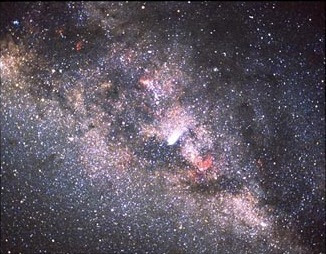 Durston's last two paragraphs bear emphasizing: Life elsewhere in the cosmos would not be especially surprising given the truth of theism, but on the assumption that atheism is true the discovery of extraterrestrial life would be breathtakingly astounding.
It's truly ironic that so many of those who fervently hope to find evidence of extraterrestrial organisms are themselves metaphysical naturalists, i.e. atheists. These folks are apparently eager to find evidence that their most important metaphysical commitments are wrong. That just seems odd.
 | ||
| Oumuamua |
He wanted to know what I thought of the possibility that Oumuamua is actually an engineered space craft of some sort, and also what I thought would be the theological implications of discovering that there really are other civilizations elsewhere in the cosmos.
These are interesting questions and since there may be others who wonder about them and since I've posted about these topics in the past, I thought I'd rerun a couple of those posts.
Today I'm putting up one that gave my response to the matter of the theological implications of the discovery of extraterrestrial life. Actually, the post summarizes the thinking of a chemist named Kirk Durston. He takes a position that may seem counterintuitive to some readers, so see what you think.
Here's what I posted in May of 2018:
Although it's hard to see exactly why, many people are of the mind that if scientists ever discovered life on other planets it would be a devastating blow to theistic belief. It's apparently thought that theism, particularly Christian theism, entails the belief that life was created only on earth and nowhere else and that the discovery of life in some distant locale would thus refute theism.
Protein chemist Kirk Durston has a different take on the matter, though. He argues that if life were ever to be discovered elsewhere in the universe it would be a devastating blow, not to theism but to atheism.
Here is the gravamen of his essay:
When it comes to the idea that life spontaneously self-assembled itself in the past, thousands of our brightest minds have worked on the problem for over half a century with no prospect of success in the foreseeable future. In fact, the more we learn, the more we realize how difficult the problem is. The challenge is three-fold. First, we have to figure out how intelligent scientists can create a simple life form from scratch in the lab.
Second, having done it ourselves, we have to see if realistic natural processes can do the same thing. The third problem is vastly more difficult: figure out how the information to build life forms gets encoded in these self-replicating molecules without an intelligent programmer. We are still working on the first problem, with no hint of success on the horizon. That might be significant, right there.
A 2011 article in Scientific American, “Pssst! Don’t tell the creationists, but scientists don’t have a clue how life began,” summarized our lack of progress in the lab. Of course, there are plenty of scenarios, but creative story-telling should not be confused with doing science, or making scientific discoveries. With regard to “thousands of papers” published each year in the field of evolution, as Austin Hughes wrote, “This vast outpouring of pseudo-Darwinian hype has been genuinely harmful to the credibility of evolutionary biology as a science.”
Evolutionary biologist Eugene Koonin, meanwhile, calculates the probability of a simple replication-translation system, just one key component, to be less than 1 chance in 10^1,018 making it unlikely that life will ever spontaneously self-assemble anywhere in the universe. His proposed solution is a near-infinite number of universes, something we might call a “multiverse of the gaps.” ....Indeed, we would need a vast number of universes all working on the problem to get lucky enough to see life spontaneously assemble itself in just one of them.
The probability of life spontaneously self-assembling anywhere in this universe is mind-staggeringly unlikely; essentially zero. If you are so unquestioningly naïve as to believe we just got incredibly lucky, then bless your soul.
If we were to discover extraterrestrial life, however, then we would have had to get mind-staggeringly lucky two times! Like the forensic detectives at the lotteries commission, a thinking person would have to start operating on the well-founded suspicion that “something is going on.”
The discovery of extraterrestrial life would be the death knell for atheism, at least for the thinking atheist. On the other hand, such a discovery should not be in the least surprising, if there is a supernatural Creator who has designed the universe to support life, and has brought about life and beauty throughout the universe, even if no human ever gets to see it.

It's truly ironic that so many of those who fervently hope to find evidence of extraterrestrial organisms are themselves metaphysical naturalists, i.e. atheists. These folks are apparently eager to find evidence that their most important metaphysical commitments are wrong. That just seems odd.
Saturday, June 24, 2023
Justice for All (Except ...)
A column by the Wall Street Journal's Kimberley Strassel leads one to conclude that anyone who defends either the current DOJ, IRS or the Bidens is knowingly and willfully aligning themselves with diseased political institutions and a thoroughly corrupt political family.
I have serious reservations about most claims of "white privilege," but the plea agreement arrived at by the DOJ and the president’s son on Tuesday might cause me to reassess.
Hunter received little more than a stern "Naughty Boy" from the DOJ and was allowed to plead guilty to two misdemeanors for “failure” to pay taxes, and a pretrial “diversion” agreement to avoid a felony firearms charge, the very same charge for which many black men are currently serving jail time.
So how did Hunter Biden get off so lightly? Strassel's column lays out some very ugly facts. She writes:
There's more on the government's stonewalling of the investigation in Strassel's column, but the worst part of her report is this:
Their reaction to Mr. Shapley's allegations will tell us a lot about their own integrity and trustworthiness.
I have serious reservations about most claims of "white privilege," but the plea agreement arrived at by the DOJ and the president’s son on Tuesday might cause me to reassess.
Hunter received little more than a stern "Naughty Boy" from the DOJ and was allowed to plead guilty to two misdemeanors for “failure” to pay taxes, and a pretrial “diversion” agreement to avoid a felony firearms charge, the very same charge for which many black men are currently serving jail time.
So how did Hunter Biden get off so lightly? Strassel's column lays out some very ugly facts. She writes:
House Ways and Means Chairman Jason Smith on Thursday released the testimony of Gary Shapley and another, anonymous IRS whistleblower. They tell a story of blocked search warrants, tip-offs to Mr. Biden’s team, squelched avenues of investigation, downgraded charges, and interference by Joe Biden’s appointees.How, exactly, did all this happen?
Mr. Shapley, a 14-year IRS veteran, said the Justice Department, its Tax Division and the Delaware U.S. Attorney’s Office “provided preferential treatment and unchecked conflicts of interest.”
Mr. Shapley, leader of an elite team of agents specializing in international tax investigations, was brought in as supervisor of the Hunter case in January 2020. He says he quickly was stopped from taking normal investigatory steps.That's interesting. There was no reluctance in the DOJ to get a search warrant for Donald Trump's residence at Mar-a-Lago. Why balk at searching Hunter's property?
One example: He says his team was told in September 2020 by Assistant U.S. Attorney Lesley Wolf that they couldn’t pursue a search warrant of Joe Biden’s guest house (Hunter’s onetime residence) because of the “optics” and because “there is no way we will get that approved.”
In December 2020 the team wanted to search a storage unit in Virginia where Hunter had moved business documents. Ms. Wolf again objected, then tipped off Hunter’s defense counsel, “ruining our chance to get to evidence before being destroyed, manipulated, or concealed,” Mr. Shapley said.The ever-vigilant Ms. Wolf also intervened to protect the Bidens in other ways:
Federal Bureau of Investigation headquarters also tipped Hunter’s Secret Service team to a proposed “day of action” in which members of U.S. Attorney David Weiss’s team intended to conduct surprise interviews of witnesses—including Hunter. This gave a group “close to Hunter” the opportunity to “obstruct the approach,” and of the “12 interviews we hoped to conduct on our day of action, we only got one substantive interview.” Hunter lawyered up.
Along the way, according to Mr. Shapley’s testimony, Ms. Wolf told investigators not to ask any questions about “dad” or “the big guy.” They were blocked from pursuing leads about the financial transactions of Hunter’s children, since she said they’d get “into hot water if we interview the president’s grandchildren.”According to Mr. Shapley, his team was prepared to pursue these charges but was blocked by Biden appointees—despite Attorney General Merrick Garland’s public claim that the investigating team had complete independence.
They were ordered not to look into evidence of campaign-finance violations. They were told to take Hunter’s name off official document requests, which Mr. Shapley said was “absolutely absurd.” The second whistleblower told the committee that he became “sick of fighting to do what’s right.”
The IRS team nonetheless prepared a document in late 2021 covering tax years 2014-19, in which it recommended charging Hunter with felony tax evasion, felony false tax returns, and failures to pay tax. Mr. Shapley says this was partially based on Hunter’s “textbook” tax evasion of declaring his income from the Ukrainian firm Burisma as a “loan.”
Mr. Shapley says the team was also looking into a Foreign Agents Registration Act case.
Mr. Shapley notes that the proper venue for a tax case is where a subject resides or a return is filed; in Hunter’s case, the District of Columbia or California. But he says the U.S. attorney in the capital, Matthew Graves, refused to bring charges, and when Mr. Weiss asked for authority to bring charges there, he “was denied.” Mr. Shapley said U.S. Attorney Martin Estrada of California’s Central District, similarly declined to bring charges. Messrs. Graves and Estrada were both appointed by Joe Biden.When those whose sworn duty it is to uphold the law fail to do so they need to be removed from office. A country that has one legal standard for ordinary people and Republicans and another standard for Democrat elites is a country that is in an advanced state of cultural putrefaction and dissolution.
There's more on the government's stonewalling of the investigation in Strassel's column, but the worst part of her report is this:
Mr. Shapley provided further evidence of influence peddling. He gave the committee a 2017 WhatsApp message in which Hunter tells a Chinese businessman “I am sitting here with my father” and pushes the businessman to fulfill a “commitment.” He warns the businessman to personally resolve the issue that night, or “I will make certain that between the man sitting next to me and every person he knows and my ability to forever hold a grudge that you will regret not following my direction.”Ms. Strassel assures us that there's plenty more, including Mr. Shapley’s evidence of intimidation and retaliation against his team, so I'd like to know how much interest there is in the liberal media in Mr. Shapley's testimony? After all, one can be sure that if this were Donald Trump or his son involved in these crimes the media would be howling so loud you wouldn't need to have the television on to hear them.
Mr. Shapley also says that Hunter’s partner, Rob Walker, admitted to investigators that a Joe Biden appearance (while out of office) at a Hunter business meeting with the Chinese was “orchestrated” to “bolster” the “chances at making a deal work out.”
Mr. Shapley says Hunter’s attorney warned prosecutors that any charges would be “career suicide.”
Their reaction to Mr. Shapley's allegations will tell us a lot about their own integrity and trustworthiness.
Friday, June 23, 2023
Scientism and Our Modern Madness
A classic work by Michael Aeschliman on C.S. Lewis has been reissued under the title The Restoration of Man: C.S. Lewis and the Continuing Case Against Scientism.
Scientism may be considered the dominant religious expression of modernity. It's the view that the scientific method is the only reliable means of attaining truth and that anything that can't be known through the methodology of scientific investigation is not knowable and not worth believing.
The definitive critique of scientism, in my opinion, is philosopher J.P.Moreland's 2018 book Scientism and Secularism, but Aeschliman's book is also worthwhile and geared more toward the literary reader rather than the philosopher.
Former Archbishop of Canterbury Rowan Williams says of Aeschliman's book that,
Klinghoffer writes:
When common sense withers in a culture madness soon swoops in to take its place.
Scientism may be considered the dominant religious expression of modernity. It's the view that the scientific method is the only reliable means of attaining truth and that anything that can't be known through the methodology of scientific investigation is not knowable and not worth believing.
The definitive critique of scientism, in my opinion, is philosopher J.P.Moreland's 2018 book Scientism and Secularism, but Aeschliman's book is also worthwhile and geared more toward the literary reader rather than the philosopher.
Former Archbishop of Canterbury Rowan Williams says of Aeschliman's book that,
The long overdue reappraisal of C.S. Lewis as a serious social critic and public intellectual has been much helped by Michael Aeschliman’s incisive monograph; its appearance in a new edition is very welcome at a time when crude scientism and incoherent forms of reductionist ideology seem (bafflingly) more popular than ever — as if we really don’t want to be human if being human involves reasoning, irony, growth, wisdom and joy.David Klinghoffer focuses on Williams' assertion that contemporary scientific and philosophical reductionism is stripping us of our humanity, "as if we really don’t want to be human."
Klinghoffer writes:
It’s no secret that our reigning culture is anti-human. As Wesley Smith has written, a major drift in modern thinking “seek[s] to push us off the pedestal of unique value,” with “many academics, biological scientists, and evolutionary philosophers hav[ing] joined the anti-human crusade.”Klinghoffer's analogy to gender dysphoria is interesting for the question it tacitly raises. If the belief of those who suffer from the conviction that though they possess all the biological appurtenances of maleness they are nevertheless female is to be respected and accommodated, by what logic can we deny someone the same consideration who, despite having all the biological characteristics of a human being, nevertheless believes he's a cow?
That many adults don’t wish to be adults, and fight determinedly against adulthood with what they consider its unwelcome trappings (responsibility for others, personal dignity, even adult clothing), is also well known. But that many of us “don’t want to be human” is an additional insight, and a profound one.
You could call this twist in our thinking species dysphoria.
When common sense withers in a culture madness soon swoops in to take its place.
Thursday, June 22, 2023
Dred and Harriet Scott
Most school students learn, or at least used to learn, that opposition to slavery mushroomed in the northern states with the Dred Scott Supreme Court decision of 1857, but the details surrounding that infamous ruling are often less well known.
They are very interesting however, and David Hackett Fischer recounts them, and the stories of many other slaves in the antebellum years, in his magisterial work African Founders: How Enslaved People Expanded American Ideals.
Fischer tells us that Dred (short for Etheldred) Scott was born a slave in Southampton Co. Virginia in 1799. His owner, a man named Ben Blow, moved his slaves first to Huntsville, Alabama and then to St. Louis, Missouri in 1830.
There Scott was sold to an army surgeon named John Emerson who took him to free states and territories where slavery had been prohibited by the Northwest Ordinance of 1787 and the Missouri Compromise of 1820.
In 1837 Scott was living in free Wisconsin territory near what is today Minneapolis, Minnesota, where he met another Virginia slave named Harriet Robinson. The two decided to marry and they were joined in a formal matrimonial service by Harriet's master, a justice of the peace named, Lawrence Taliaferro. The formal service was permitted only to free people. Taliaferro then sold Harriet to John Emerson so that the couple could live together.
Emerson was subsequently ordered to southern military posts, but he left Dred and Harriet in the north where they were leased as servants to other officers. They lived in virtual freedom and the first of their four children was born in free territory.
In 1837 the Scotts returned to Missouri, a slave state. Dred was hired out to numerous people but continued to live in virtual freedom while his new owner, the widow of John Emerson, continued to hire him out as a source of income for herself.
While working for a law firm he learned that, under Missouri's judicial principle of "once free, always free," slaves who lived in free territory became free themselves, so Dred and Harriet sued for their freedom.
In 1848 a Missouri court nevertheless ruled against them, so they began a series of appeals in 1850, all of which they lost. Even so, with the help of people who knew them, including members of Ben Blow's family, the case eventually ended up in the Supreme Court.
The ruling seemed at first to be a great victory for southern slave owners, but it proved their undoing. Many northerners who were indifferent to the cause of abolition were outraged by the case, and as a result, slave owners and their northern allies lost control of Congress in 1858.
They then lost the presidency in 1860, and ultimately were devastated by a civil war that produced emancipation and the 13th, 14th and 15th Amendments which abolished slavery throughout the United States and affirmed the rights of citizenship without limits of race, ethnicity, or previous condition of bondage.
Doubtless, abolition would've happened eventually, but it was accelerated by the determination of Dred and Harriet Scott and the foolish bigotry of Roger Taney.
They are very interesting however, and David Hackett Fischer recounts them, and the stories of many other slaves in the antebellum years, in his magisterial work African Founders: How Enslaved People Expanded American Ideals.
Fischer tells us that Dred (short for Etheldred) Scott was born a slave in Southampton Co. Virginia in 1799. His owner, a man named Ben Blow, moved his slaves first to Huntsville, Alabama and then to St. Louis, Missouri in 1830.
There Scott was sold to an army surgeon named John Emerson who took him to free states and territories where slavery had been prohibited by the Northwest Ordinance of 1787 and the Missouri Compromise of 1820.
In 1837 Scott was living in free Wisconsin territory near what is today Minneapolis, Minnesota, where he met another Virginia slave named Harriet Robinson. The two decided to marry and they were joined in a formal matrimonial service by Harriet's master, a justice of the peace named, Lawrence Taliaferro. The formal service was permitted only to free people. Taliaferro then sold Harriet to John Emerson so that the couple could live together.
Emerson was subsequently ordered to southern military posts, but he left Dred and Harriet in the north where they were leased as servants to other officers. They lived in virtual freedom and the first of their four children was born in free territory.
In 1837 the Scotts returned to Missouri, a slave state. Dred was hired out to numerous people but continued to live in virtual freedom while his new owner, the widow of John Emerson, continued to hire him out as a source of income for herself.
While working for a law firm he learned that, under Missouri's judicial principle of "once free, always free," slaves who lived in free territory became free themselves, so Dred and Harriet sued for their freedom.
In 1848 a Missouri court nevertheless ruled against them, so they began a series of appeals in 1850, all of which they lost. Even so, with the help of people who knew them, including members of Ben Blow's family, the case eventually ended up in the Supreme Court.
 | |||
| Dred and Harriet Scott |
The case was heard by Chief Justice Roger Brooke Taney. Fischer writes:
[Tawney was] an odd character, a Maryland Federalist who had become a Jacksonian Democrat. He was also a Maryland planter who had freed his own slaves in early life, but became a strong defender of slavery as an institution. On March 6, 1857 a majority of the court rejected Scott's suit.The Scott's lost the case, but were manumitted by their owners anyway. Unfortunately, Dred didn't live to see the consequence of his perseverance, dying in 1858 of tuberculosis.
Chief Justice Taney went further. He asserted that the Northwest Ordinance of 1787 could not extend freedom or citizenship to any person of color. And the court ruled that the Missouri Compromise ...was unconstitutional in excluding slavery, depriving masters of their property, and extending freedom and citizenship to people of African ancestry....
Further, Taney and other justices added obiter dicta that went far beyond the case itself.They ruled that no slave or descendant of a slave could ever be free, or become a citizen, or bring a freedom suit in any court of the United States; that Congress could never abolish slavery anywhere; and that no federal or state court could deprive an owner of his property in a slave.
The ruling seemed at first to be a great victory for southern slave owners, but it proved their undoing. Many northerners who were indifferent to the cause of abolition were outraged by the case, and as a result, slave owners and their northern allies lost control of Congress in 1858.
They then lost the presidency in 1860, and ultimately were devastated by a civil war that produced emancipation and the 13th, 14th and 15th Amendments which abolished slavery throughout the United States and affirmed the rights of citizenship without limits of race, ethnicity, or previous condition of bondage.
Doubtless, abolition would've happened eventually, but it was accelerated by the determination of Dred and Harriet Scott and the foolish bigotry of Roger Taney.
Wednesday, June 21, 2023
Confirmation of Two Creationist Predictions about Origins
Long time readers of VP will know that I'm agnostic about much that has to do with the so-called Creation-Evolution debate.
I do stake my flag, however, on two simple propositions: 1) however life arose on the planet and however long ago it happened it's exceedingly unlikely that it arose through a blind, unguided process like naturalistic evolution, and 2) both the universe and living things show manifold evidence of having been intelligently designed.
Having said this, a story a few years ago at Phys.org discussed a paper which, I should've thought, would've created shock waves among naturalistic scientists and philosophers, but which has so far generated very little comment.
I thought it would've created a considerable stir because it confirms two predictions made by creationists (those who believe that the earth is relatively young and that all life forms were created at essentially the same time) and which are wholly unexpected on the assumption of a gradual evolution of life as posited by Darwinism.
A little background: Darwinian evolutionists argue that life on earth has been around for billions of years and that the various forms, were we able to see all that have ever appeared, would be observed to grade into each other almost seamlessly.
In a gradual process that takes millions of years, one species slowly transitions to a similar but slightly different form, until the original form and its descendents become reproductively isolated into two separate species.
On the Darwinian view different taxa would appear at different times in the history of the earth, and thus the age of one species might be substantially different from the age of another, perhaps by millions of years.
On the other hand, many creationists, at least those who reject the idea of universal descent from a common ancestor, assert that both of these claims are incorrect. They predict that all species on earth are approximately the same age and that since the major taxa were created independently there will not be significant evidence of transitions between them.
The article in Phys.org reveals that both of these creationist predictions, neither of which is entailed by Darwinian evolution, seem to have been confirmed. Here are a few excerpts:
This does not, of course, refute Darwinism and establish creationism, but it is a finding that requires a secondary explanation on Darwinism but which is directly predicted by creationists.
Here's another:
Again, there could be a satisfactory Darwinian account of why this is, but the point is that it confirms a direct prediction of the creationist hypothesis.
None of this means that creationists are correct and that Darwinians are wrong. The article offers some possible explanations for why, on Darwinian terms, the aforementioned findings may obtain. What it does seem to suggest, though, is that the Darwinian criticism of creationism, that it's a metaphysical, not a scientific, construct, is becoming harder to defend.
The distinguishing characteristic of science is what philosopher Karl Popper called conjectures and refutations. That is, scientific researchers make predictions (conjectures) based on theory and then test those predictions to see if they're confirmed or refuted by the evidence.
To the extent that the creationist hypothesis generates predictions that are confirmed by the empirical evidence, to that extent it confounds those who wish to exclude it from the realm of science and consign it to the sphere of religious faith.
I do stake my flag, however, on two simple propositions: 1) however life arose on the planet and however long ago it happened it's exceedingly unlikely that it arose through a blind, unguided process like naturalistic evolution, and 2) both the universe and living things show manifold evidence of having been intelligently designed.
Having said this, a story a few years ago at Phys.org discussed a paper which, I should've thought, would've created shock waves among naturalistic scientists and philosophers, but which has so far generated very little comment.
I thought it would've created a considerable stir because it confirms two predictions made by creationists (those who believe that the earth is relatively young and that all life forms were created at essentially the same time) and which are wholly unexpected on the assumption of a gradual evolution of life as posited by Darwinism.
A little background: Darwinian evolutionists argue that life on earth has been around for billions of years and that the various forms, were we able to see all that have ever appeared, would be observed to grade into each other almost seamlessly.
In a gradual process that takes millions of years, one species slowly transitions to a similar but slightly different form, until the original form and its descendents become reproductively isolated into two separate species.
On the Darwinian view different taxa would appear at different times in the history of the earth, and thus the age of one species might be substantially different from the age of another, perhaps by millions of years.
On the other hand, many creationists, at least those who reject the idea of universal descent from a common ancestor, assert that both of these claims are incorrect. They predict that all species on earth are approximately the same age and that since the major taxa were created independently there will not be significant evidence of transitions between them.
The article in Phys.org reveals that both of these creationist predictions, neither of which is entailed by Darwinian evolution, seem to have been confirmed. Here are a few excerpts:
The study's most startling result, perhaps, is that nine out of 10 species on Earth today, including humans, came into being 100,000 to 200,000 years ago. "This conclusion is very surprising, and I fought against it as hard as I could," [said David Thaler at the University of Basel in Switzerland, who co-authored the findings last week.]This doesn't mean that life is only 200,000 years old. It only means that 90% of the species on earth today have been in existence for about the same length of time. In other words, this is consistent with the creationist hypothesis that there was a major environmental event early on in the history of the human race that produced a biological bottleneck of sorts, out of which emerged most of the forms that we find inhabiting the planet today.
That reaction is understandable: How does one explain the fact that 90 percent of animal life, genetically speaking, is roughly the same age? Was there some catastrophic event 200,000 years ago that nearly wiped the slate clean?
In analysing the [genetic] barcodes across 100,000 species, the researchers found a telltale sign showing that almost all the animals emerged about the same time as humans.
This does not, of course, refute Darwinism and establish creationism, but it is a finding that requires a secondary explanation on Darwinism but which is directly predicted by creationists.
Here's another:
And yet—another unexpected finding from the study—species have very clear genetic boundaries, and there's nothing much in between. "If individuals are stars, then species are galaxies," said Thaler. "They are compact clusters in the vastness of empty sequence space."In other words, the lack of transitions between species is perplexing on the Darwinian view of a gradual evolution of life. Creationists have long pointed to the lack of transitional forms in the fossil record, but this study shows that even in extant forms of life species seem to be genetically isolated from each other.
The absence of "in-between" species is something that also perplexed Darwin, he said.
Again, there could be a satisfactory Darwinian account of why this is, but the point is that it confirms a direct prediction of the creationist hypothesis.
None of this means that creationists are correct and that Darwinians are wrong. The article offers some possible explanations for why, on Darwinian terms, the aforementioned findings may obtain. What it does seem to suggest, though, is that the Darwinian criticism of creationism, that it's a metaphysical, not a scientific, construct, is becoming harder to defend.
The distinguishing characteristic of science is what philosopher Karl Popper called conjectures and refutations. That is, scientific researchers make predictions (conjectures) based on theory and then test those predictions to see if they're confirmed or refuted by the evidence.
To the extent that the creationist hypothesis generates predictions that are confirmed by the empirical evidence, to that extent it confounds those who wish to exclude it from the realm of science and consign it to the sphere of religious faith.
Tuesday, June 20, 2023
The African Slave Trade Is Still Flourishing
Charles Jacobs is the president of the American Anti-Slavery Group. A few years ago he wrote a very important and interesting piece for The Federalist in which he informed us that black Africans are still being bought and sold by slavers in Africa, but there's very little interest in doing anything about it in Western nations or the press.
Unfortunately, little has changed since he wrote that column. Perhaps that's because the perpetrators are mostly Arab Muslims, a favored class among Western media liberals due to their status as an historically "oppressed" group, and the victims of this odious trafficking are largely Christian, and thus not deemed worthy of media attention.
If Israelis were selling Palestinians into bondage, or white South Africans were once again imposing apartheid on blacks it'd be all we'd be hearing from our media megaphones, but Arab Muslims enslaving black Christians elicits little more than a yawn from our "compassionate" elites. They're too preoccupied with climate change and imprisoning Donald Trump to concern themselves with genuine human rights atrocities.
Here are a few excerpts from Jacobs' article:
Unfortunately, little has changed since he wrote that column. Perhaps that's because the perpetrators are mostly Arab Muslims, a favored class among Western media liberals due to their status as an historically "oppressed" group, and the victims of this odious trafficking are largely Christian, and thus not deemed worthy of media attention.
If Israelis were selling Palestinians into bondage, or white South Africans were once again imposing apartheid on blacks it'd be all we'd be hearing from our media megaphones, but Arab Muslims enslaving black Christians elicits little more than a yawn from our "compassionate" elites. They're too preoccupied with climate change and imprisoning Donald Trump to concern themselves with genuine human rights atrocities.
Here are a few excerpts from Jacobs' article:
Every day across the African continent, black men, women, and children are captured, bought, and sold into slavery with the Western world paying scant attention. Human rights groups have marched and battled against abuses noticeably less cruel and evil than human bondage, yet no major organization has attempted to free today’s black slaves, much less taken meaningful steps to raise awareness about their plight.Jacobs goes on to discuss two factors impeding any effective action that might eliminate this horrific practice, or at least diminish it. You can read about these and more of what Jacobs has to say about this modern plague at the link.
For instance, in Mauritania, although slavery has been legally banned five times since 1961, it nevertheless persists with tens of thousands of blacks continuing to be held in bondage. While it is forbidden in the Qur’an for Muslims to enslave fellow Muslims, in Mauritania, racism trumps religious doctrine — as it did in the West — as Arab and Berber Muslims enslave African Muslims.
Americans first heard about Islamist slave raids in Nigeria when Michelle Obama made it a cause célèbre with her “#BringBackOurGirls” hashtag, but interest quickly faded, and Boko Haram continued to kidnap hundreds of Christian girls into jihad slavery. So cruel are the events of their captivity that some girls prefer death as suicide bombers to the life of a slave.
Today, Fulani Muslim herdsmen raid Christian villages, massacring their inhabitants. President Muhammadu Buhari, a Muslim, has done relatively little to stop the assaults, even in the face of demands for action from the White House.
In Algeria, sub-Saharan Africans fleeing violence and poverty are enslaved by Algerian Arabs as they attempt to cross the Mediterranean into Europe. According to the Global Slavery Index (GSI), 106,000 black Africans are estimated to be enslaved in Algeria. Migrant women and children of both sexes risk being forced into sexual slavery, while men perform unskilled labor.
The GSI estimates as many as 48,000 migrants are enslaved in Libya, with survivors reporting torture and sexual slavery.
Monday, June 19, 2023
Our Nation Needs Strong Fathers
When David Blankenhorn's Fatherless America came out in 1995 it became an instant classic on the importance of men to the well-being of the American family. Blankenhorn said so many things in that book that needed to be said after our society had suffered through two decades of radical feminism with its relentless downplaying of the need for traditional two-parent families, and even though the book came out almost thirty years ago, what he said in 1995 needs saying as much today as it did then. Recall Gloria Steinem's aphorism that "a woman needs a man like a fish needs a bicycle." It turned out that women and children both need men, at least fathers, as much as a fish needs water.
Yesterday was Fathers' Day so today might be a good time to remind ourselves of some of the key points Blankenhorn illuminates in Fatherless America.
He tells us, for instance, that men need to be fathers. Fatherhood is society's most important role for men. More than any other activity it helps men become good men. Fathers are more likely to obey the law, to be good citizens, and to care about the needs of others. Men who remain single are more likely than those who marry to die young, or commit crimes, or both (This is a point also made by George Gilder in his equally fine 1986 book Men and Marriage which I heartily recommend).
Children need fathers as protectors. Eighty-four percent of all cases of non-parental child abuse occur in single parent homes and of these cases, 64% of them occur at the hands of mom's boyfriend. Statistically speaking, teenage girls are far safer in the company of their father than in the company of any other man.
Children need fathers as providers. Fatherlessness is the single most powerful determinant of childhood poverty. Regardless of how poverty is measured, single women with children are the poorest of all demographic groups. Children who come from two-parent families are much more likely to inherit wealth from paternal grandparents, much more likely to get financial support at an age when they're going to school, buying a home, or starting their own families than children from single parent homes.
The economic fault line in this country doesn't run between races, it runs between those families in which fathers are present and those in which they are not.
Children need fathers as role models. Boys raised by a traditionally masculine father are much less likely to commit crimes, whereas boys raised without a father are much more likely to do poorly in school and wind up in prison or dead.
Valuing fatherhood has to be instilled in boys from a young age by a masculine father. Commitment to one woman and to their children is not something that comes naturally to men. It's almost impossible, for instance, to find a culture in which women voluntarily abandon their children in large numbers, but to find a culture in which men in large numbers voluntarily abandon their children all one need do is look around.
Boys who grow up without fathers are statistically more likely to become louts, misogynistic, abusive, authoritarian, and violent. Girls who grow up without fathers are more likely to become promiscuous. A society in which a father is little more than a sperm donor is a society of fourteen year-old girls with babies and fourteen year-old boys with guns.
Stepfathers and boyfriends (Blankenhorn calls them "nearby guys") cannot replace the biological father. For stepfathers and boyfriends the main object of desire and commitment, to the extent these exist, is the mother, not the child. For the married father this distinction hardly exists. The married father says "My mate, my child". The stepfather and boyfriend must say "My mate, the other guy's child".
Children are a glue for biological parents that serves to hold them together, but they're a wedge between non-biological parents, tending to be a source of tension which pushes them apart.
Fatherhood means fathers teaching children a way of life, which is the heart of what it is to be a father. More than providing for their material needs, or shielding them from harm, or even caring for them and showing them affection, paternal sponsorship means cultural transmission - endowing children with competence and character by showing them how to live a certain kind of life.
One wishes every man - and woman - would read Blankenhorn's Fatherless America. It's loaded with great insight.
Yesterday was Fathers' Day so today might be a good time to remind ourselves of some of the key points Blankenhorn illuminates in Fatherless America.
He tells us, for instance, that men need to be fathers. Fatherhood is society's most important role for men. More than any other activity it helps men become good men. Fathers are more likely to obey the law, to be good citizens, and to care about the needs of others. Men who remain single are more likely than those who marry to die young, or commit crimes, or both (This is a point also made by George Gilder in his equally fine 1986 book Men and Marriage which I heartily recommend).
Children need fathers as protectors. Eighty-four percent of all cases of non-parental child abuse occur in single parent homes and of these cases, 64% of them occur at the hands of mom's boyfriend. Statistically speaking, teenage girls are far safer in the company of their father than in the company of any other man.
Children need fathers as providers. Fatherlessness is the single most powerful determinant of childhood poverty. Regardless of how poverty is measured, single women with children are the poorest of all demographic groups. Children who come from two-parent families are much more likely to inherit wealth from paternal grandparents, much more likely to get financial support at an age when they're going to school, buying a home, or starting their own families than children from single parent homes.
The economic fault line in this country doesn't run between races, it runs between those families in which fathers are present and those in which they are not.
Children need fathers as role models. Boys raised by a traditionally masculine father are much less likely to commit crimes, whereas boys raised without a father are much more likely to do poorly in school and wind up in prison or dead.
Valuing fatherhood has to be instilled in boys from a young age by a masculine father. Commitment to one woman and to their children is not something that comes naturally to men. It's almost impossible, for instance, to find a culture in which women voluntarily abandon their children in large numbers, but to find a culture in which men in large numbers voluntarily abandon their children all one need do is look around.
Boys who grow up without fathers are statistically more likely to become louts, misogynistic, abusive, authoritarian, and violent. Girls who grow up without fathers are more likely to become promiscuous. A society in which a father is little more than a sperm donor is a society of fourteen year-old girls with babies and fourteen year-old boys with guns.
Stepfathers and boyfriends (Blankenhorn calls them "nearby guys") cannot replace the biological father. For stepfathers and boyfriends the main object of desire and commitment, to the extent these exist, is the mother, not the child. For the married father this distinction hardly exists. The married father says "My mate, my child". The stepfather and boyfriend must say "My mate, the other guy's child".
Children are a glue for biological parents that serves to hold them together, but they're a wedge between non-biological parents, tending to be a source of tension which pushes them apart.
Fatherhood means fathers teaching children a way of life, which is the heart of what it is to be a father. More than providing for their material needs, or shielding them from harm, or even caring for them and showing them affection, paternal sponsorship means cultural transmission - endowing children with competence and character by showing them how to live a certain kind of life.
One wishes every man - and woman - would read Blankenhorn's Fatherless America. It's loaded with great insight.
Saturday, June 17, 2023
Fine-Tuned for Life
An article at Evolution News lists and explains the significance of the fine-tuning of 22 cosmic parameters which must be set to precisely the values they have else either the universe would not exist or if it did it wouldn't be a universe suitable for life.
To illustrate this astonishing precision imagine that if the mass of the earth deviated from its actual mass by as much as the mass of a grain of sand the earth wouldn't exist. That's the sort of precision required in not just one cosmic parameter but in dozens of them.
Examples of this fine-tuning include the expansion rate of the universe (the cosmological constant) which must be calibrated to one part in 10^120. To grasp the magnitude of this number consider that there are only 10^80 atoms in the entire universe.
Another example is the strength of gravity. Imagine that the range of possible values for the strength of gravity is represented by a ruler stretched across the entire expanse of the universe. The actual strength of gravity is located at some point on the ruler. If it were stronger or weaker than what it is such that its value deviated by just one inch on the ruler, no stars or planets would exist.
A third example has to do with the initial conditions that existed at the origin of the universe. For instance the distribution of mass/energy in the earliest stage of the Big Bang could've had any value but the odds that it would be a value that produces a life-permitting universe was calculated by Roger Penrose to be one in 10^10^123. This is incomprehensible.
How is it that a universe such as ours exists with so many factors being just right for intelligent life? Some people, like philosopher Bertrand Russell, just shrug their shoulders and tell us that, "The universe is just there and that's all," but this is to display a strange lack of curiosity. It's a "science stopper."
Here's a list of some of the fine-tuned parameters in our universe and in our solar system and earth. You can find an explanation for most of them at the link:
Cosmic Constants
When people say there is no evidence that a God exists what they mean is that they just haven't bothered to avail themselves of the evidence that's there.
To illustrate this astonishing precision imagine that if the mass of the earth deviated from its actual mass by as much as the mass of a grain of sand the earth wouldn't exist. That's the sort of precision required in not just one cosmic parameter but in dozens of them.
Examples of this fine-tuning include the expansion rate of the universe (the cosmological constant) which must be calibrated to one part in 10^120. To grasp the magnitude of this number consider that there are only 10^80 atoms in the entire universe.
Another example is the strength of gravity. Imagine that the range of possible values for the strength of gravity is represented by a ruler stretched across the entire expanse of the universe. The actual strength of gravity is located at some point on the ruler. If it were stronger or weaker than what it is such that its value deviated by just one inch on the ruler, no stars or planets would exist.
A third example has to do with the initial conditions that existed at the origin of the universe. For instance the distribution of mass/energy in the earliest stage of the Big Bang could've had any value but the odds that it would be a value that produces a life-permitting universe was calculated by Roger Penrose to be one in 10^10^123. This is incomprehensible.
How is it that a universe such as ours exists with so many factors being just right for intelligent life? Some people, like philosopher Bertrand Russell, just shrug their shoulders and tell us that, "The universe is just there and that's all," but this is to display a strange lack of curiosity. It's a "science stopper."
Here's a list of some of the fine-tuned parameters in our universe and in our solar system and earth. You can find an explanation for most of them at the link:
Cosmic Constants
- Gravitational force constant
- Electromagnetic force constant
- Strong nuclear force constant
- Weak nuclear force constant
- Cosmological constant
- Initial distribution of mass energy
- Ratio of masses for protons and electrons
- Velocity of light
- Mass excess of neutron over proton
- Steady plate tectonics with right kind of geological interior
- Right amount of water in crust
- Large moon with right rotation period
- Proper concentration of sulfur
- Right planetary mass
- Near inner edge of circumstellar habitable zone
- Low-eccentricity orbit outside spin-orbit and giant planet resonances
- A few, large Jupiter-mass planetary neighbors in large circular orbits
- Outside spiral arm of galaxy
- Near co-rotation circle of galaxy, in circular orbit around galactic center
- Within the galactic habitable zone
- During the cosmic habitable age
- The polarity of the water molecule
When people say there is no evidence that a God exists what they mean is that they just haven't bothered to avail themselves of the evidence that's there.
Friday, June 16, 2023
Reparations
The Wall Street Journal's Jason Riley is a frequent home run hitter on the subject of race in America, and he "goes yard" in a recent column on reparations. He begins with some lines from the movie "Barbershop", a comedy about a black barbershop owner and the people in his orbit.
Riley quotes one character who says, “We don’t need reparations. We need restraint. Don’t go out and buy a Range Rover when you livin’ with your momma. And pay your momma some rent.” He adds,
Riley continues:
Riley agrees:
In his excellent study of the black experience in America from the 17th century through Emancipation titled African Founders: How Enslaved People Expanded American Ideals, David Hackett Fischer notes that in Pennsylvania as early as the late 18th century those blacks who had been freed from slavery were forming stable families, becoming prosperous, raising educated children, forming churches and benevolent societies, etc.
They accomplished this despite racial tension and antipathy, the lack of any social safety net and despite in some cases having only recently been enslaved. To argue that blacks today can't do likewise and therefore need to be given a massive handout is an enormous slander against black ability.
Riley concludes that,
For those inclined toward a more scholarly look at the black experience I can't recommend Fischer's book highly enough. It's 749 pages long, but it's fascinating and an excellent counterpoint to the views of Hannah Nicole-Jones' 1619 Project.
Riley quotes one character who says, “We don’t need reparations. We need restraint. Don’t go out and buy a Range Rover when you livin’ with your momma. And pay your momma some rent.” He adds,
Those lines come from Ricky, a character in the hit 2002 comedy “Barbershop.” The movie has a nearly all-black cast and is set mostly in a clip joint on the South Side of Chicago, where Ricky and his fellow barbers engage in free-wheeling nonstop banter with customers. Ricky was responding to a small-time crook who had said that ancestral slavery “ruined my whole life” and to another customer who suggested that black people demand reparations from the government.That's certainly true. Eddie is irreverent and criticizes everybody from Rosa Parks to Martin Luther King, but he can get away with it because he's funny and he's black.
Another barber, an old-timer named Eddie, sides with Ricky. “We’ve had welfare and affirmative action. Is that not reparations?” When another customer says that he thinks each black American is entitled to at least $100,000, Eddie responds, “What do you think that’s gonna do? That ain’t gonna do nothing but make Cadillac the No. 1 dealership in the country.”
Twenty-one years ago, as I watched the movie in a Brooklyn theater full of other black people, these exchanges brought howls of laughter from the audience. What also struck me was that a couple of minutes of film dialogue had produced a more honest conversation about racial preferences than book-length treatments of the subject from some of the nation’s most celebrated black intellectuals.
Riley continues:
More than 20 years later, we’re still debating the topic. Last week New York voted to follow California down the slavery-reparations rabbit hole. Nutty ideas that originate in the Golden State often spread to other parts of the country over time, so the development isn’t too surprising, and more states are sure to follow. But it is another indication that the progressive left isn’t interested in getting past race, and that social justice in practice amounts to little more than a power grab.This shows how far our society has descended into absurdity. No one living in California or New York today ever owned slaves or was enslaved. Most people paying taxes in these states are either themselves immigrants or are descended from immigrants who came here well after slavery had been abolished. Many of the blacks living in these states are descended from people who were never enslaved or were released from bondage long before the American Revolution.
New York state lawmakers concluded the legislative session on Thursday by creating a commission to study the lingering effects of slavery. California set up a reparations task force in 2020, and last month the state Legislature voted to make direct cash payments to black descendants of slaves that could amount to $1.2 million per person.
Neither Kathy Hochul nor Gavin Newsom, the Democratic governors of New York and California, respectively, has committed to signing off on this nonsense, yet it’s notable that proponents have moved the ball this far.
Riley agrees:
California was never a slave state, and New York outlawed slavery in 1827, but the absurdities of these proposals don’t end there. Slavery was an atrocity, but all the slaves and all the slaveholders are long gone. Furthermore, the vast majority of whites living in the antebellum period, even in the South, never owned slaves.So how is it just to squeeze taxpayers who had nothing to do with slavery to give a huge handout to people who've never been slaves?
Most white Americans alive today are descendants of people who came to the U.S. after the Civil War. Proponents of reparations want people who aren’t even descendants of slaveowners in the U.S. to compensate black people who were never slaves.
Progressives insist that there is a direct link between the past mistreatment of blacks and black outcomes today, but that claim is undermined by the experience of other groups. Chinese- and Japanese-Americans were also mistreated in the U.S. They were lynched, placed in internment camps, forced to attend segregated schools and denied property rights.Riley argues that it's not slavery that's responsible for black poverty and/or under-performance today:
Yet today both Asian groups outperform white Americans academically and economically and have done so for decades.
Conversely, according to the most recent Bureau of Labor Statistics report, median black weekly earnings are slightly higher than those of Hispanics, yet no one would argue that Hispanics have experienced more discrimination in the U.S. than blacks.
Those who want to blame the legacy of slavery for outcomes today are overlooking the legacy of the welfare state, which grew dramatically beginning in the late 1960s. The Great Society programs implemented under President Lyndon B. Johnson subsidized counterproductive behavior that took a huge toll on the black family.Indeed, the black family was in much better shape in the years following WWII than it's been in the years since the expansion of the welfare state in the 1960s.
Subsequently, many of the positive trends among blacks in the first two-thirds of the 20th century—from declining crime rates to educational and economic gains that were narrowing the gap with whites—either stalled or reversed course.
In his excellent study of the black experience in America from the 17th century through Emancipation titled African Founders: How Enslaved People Expanded American Ideals, David Hackett Fischer notes that in Pennsylvania as early as the late 18th century those blacks who had been freed from slavery were forming stable families, becoming prosperous, raising educated children, forming churches and benevolent societies, etc.
They accomplished this despite racial tension and antipathy, the lack of any social safety net and despite in some cases having only recently been enslaved. To argue that blacks today can't do likewise and therefore need to be given a massive handout is an enormous slander against black ability.
Riley concludes that,
Reparations can’t solve these problems, as Ricky and Eddie pointed out, because they are mainly cultural deficiencies. Another government-imposed wealth-redistribution scheme won’t do the trick, but it will almost certainly make race relations worse and encourage blacks to continue seeing themselves primarily as victims who have no control over their lives.Despite it's often off-color allusions, I commend the movie "Barbershop". It's politically incorrect and funny, but it conveys several very important messages.
Compensating blacks today for the suffering of their ancestors wouldn’t be just. It would be corrupt. “When you trade on the past victimization of your own people, you trade honor for dollars,” Shelby Steele writes. “And this trading is only uglier when you are a mere descendant of those who suffered but nevertheless prevailed.”
For those inclined toward a more scholarly look at the black experience I can't recommend Fischer's book highly enough. It's 749 pages long, but it's fascinating and an excellent counterpoint to the views of Hannah Nicole-Jones' 1619 Project.
Thursday, June 15, 2023
The Reptilian Brain and Thinking Critically
How many of us learned at some point in our education about the triune brain - the theory that the brain consists of three parts, reptilian, mammalian and human?
According to this theory, the most evolutionarily primitive part of the brain, the reptilian brain, i.e. the brain stem, which controls basic body functions like movement and breathing. It's called the reptilian brain because reptiles' brains are similar.
Somewhat more advanced is the mammalian brain, i.e. the limbic system, which controls emotion. Sitting at the apex of evolutionary development is the human brain, the cerebral cortex, which controls language, reasoning, etc.
Denyse O'Leary at Mind Matters News notes that this theory, published in the 1960s by Yale University physiologist and psychiatrist Paul D. MacLean, was made popular by astronomer Carl Sagan in his best-selling 1977 book Dragons of Eden.
The theory was popular because it fit the evolutionary paradigm that holds that the brain was constructed gradually by building more advanced parts on top of more primitive parts. Thus, our reptilian brain is a holdover from an earlier stage of our evolution.
O'Leary, however, is skeptical. She asks, "Do we have a three-part brain - reptilian, mammalian and human? Curiously, psychology textbooks teach us that we do and neuroscience studies teach us that we don’t. Who to believe? And how did that happen anyway?"
Neuroscientists scoff at the idea that the human brain is organized the way the triune brain theory suggests. O'Leary writes:
Regarding any claim made by anyone which we're urged to accept we should ask, does it offend common-sense, what's the evidence for it and to what consequences does it appear to lead? Until we're shown persuasive evidence for a scientific claim presented to us by others, particularly any claim that has political implications, violates common sense or conflicts with other beliefs we hold, we're intellectually justified in withholding acceptance.
If more people were to remain skeptical, not just about scientific theories which sound far-fetched, but also about some of the dogmas advanced by contemporary social movements, such as those involving climate, race, religion and sexuality, our culture might be a lot less confused and adrift today.
According to this theory, the most evolutionarily primitive part of the brain, the reptilian brain, i.e. the brain stem, which controls basic body functions like movement and breathing. It's called the reptilian brain because reptiles' brains are similar.
Somewhat more advanced is the mammalian brain, i.e. the limbic system, which controls emotion. Sitting at the apex of evolutionary development is the human brain, the cerebral cortex, which controls language, reasoning, etc.
Denyse O'Leary at Mind Matters News notes that this theory, published in the 1960s by Yale University physiologist and psychiatrist Paul D. MacLean, was made popular by astronomer Carl Sagan in his best-selling 1977 book Dragons of Eden.
The theory was popular because it fit the evolutionary paradigm that holds that the brain was constructed gradually by building more advanced parts on top of more primitive parts. Thus, our reptilian brain is a holdover from an earlier stage of our evolution.
O'Leary, however, is skeptical. She asks, "Do we have a three-part brain - reptilian, mammalian and human? Curiously, psychology textbooks teach us that we do and neuroscience studies teach us that we don’t. Who to believe? And how did that happen anyway?"
Neuroscientists scoff at the idea that the human brain is organized the way the triune brain theory suggests. O'Leary writes:
As University of Oslo psychology professor Christian Krog Tamnes puts the matter in an interview at Science Norway, “Those of us who research brain development and brain evolution have known for quite some time that this isn’t true.”Eldrid Borgan, in an article titled “No, you don’t have a reptilian brain inside your brain,” states that,
Tamnes points, to a paper on the topic last year: Despite 320 million years of separate evolution, lizards and mice share a core set of neuron types that are found all over the brain, “including in the cerebral cortex, challenging the notion that certain brain regions are more ancient than others.”
Emotions, such as fear and sadness, are not made in one specific place in the brain. In fact, several parts of the brain are always involved. Which parts of the brain are active vary from time to time, and from person to person.Despite the findings of neuroscientists, psychology students are apparently still being taught that we do indeed have an "Inner Lizard."
Northeastern University neuroscientist Lisa Feldman Barrett offers, “So if we absolutely need to have a metaphor, it’s much better to think of the brain as an orchestra. Even playing a simple song requires a lot of pieces to talk together effectively and in a coordinated way.”
So we can still have lots of problems but our Inner Lizard is not one of them.
Psychology lecture rooms and textbooks have been curiously slow to let go of the reptilian brain myth however....In 2020, Joseph Cesario and colleagues reported on a study of what psychology students are told about such matters:There's more on this at the link, but one lesson we might take from the above is that we should mix any pronouncement from scientists, and a forteriori the media, with a healthy dose of skepticism until were shown compelling evidence. Scientific ideas and political ideologies which were yesterday's fashion are often today's rubbish.This belief [the triune brain theory], although widely shared and stated as fact in psychology textbooks, lacks any foundation in evolutionary biology.
Our experience suggests that it may surprise many readers to learn that these ideas have long been discredited among people studying nervous-system evolution. Indeed, some variant of the above story is seen throughout introductory discussions of psychology and some subareas within the discipline…
Regarding any claim made by anyone which we're urged to accept we should ask, does it offend common-sense, what's the evidence for it and to what consequences does it appear to lead? Until we're shown persuasive evidence for a scientific claim presented to us by others, particularly any claim that has political implications, violates common sense or conflicts with other beliefs we hold, we're intellectually justified in withholding acceptance.
If more people were to remain skeptical, not just about scientific theories which sound far-fetched, but also about some of the dogmas advanced by contemporary social movements, such as those involving climate, race, religion and sexuality, our culture might be a lot less confused and adrift today.
Wednesday, June 14, 2023
Consciousness All the Way Down?
Materialism is the view that everything that exists can be reduced to material stuff. There's nothing in reality that's immaterial or which doesn't somehow derive from matter. There's no immaterial mind or soul, no immaterial beings like angels or God.
The Nobel Prize winning biologist Francis Crick (1916–2004) expressed it this way:
Unfortunately, for materialists, however, there's increasing evidence accumulating in the 21st century that materialism is false.
A number of contemporary philosophers are embracing a view called panpsychism which holds that all matter down to the tiniest atom is to some degree conscious. If this is true (I'm skeptical) then consciousness is not just something that arises in complex vertebrate brains, but inheres even in the simplest material entities.
The authors of a recent scientific paper don't go quite that far but hint strongly that consciousness is a property not just of brains but of every living cell. They argue that "all biology is cognitive information processing."
Denyse O'Leary at Evolution News raises an eyebrow at the word "cognitive":
O'Leary states:
The Nobel Prize winning biologist Francis Crick (1916–2004) expressed it this way:
You, your joys and your sorrows, your memories and your ambitions, your sense of identity and free will, are in fact no more than the behaviour of a vast assembly of nerve cells and their associated molecules. As Lewis Carroll’s Alice might have phrased it: You’re nothing but a pack of neurons.Of course, if materialism is true, as a considerable majority of 19th and 20th century philosophers and scientists assumed, then consciousness is some kind of illusion generated by the material brain. Moreover, if materialism is true theism becomes much more difficult to defend, since God is not made of matter.
Unfortunately, for materialists, however, there's increasing evidence accumulating in the 21st century that materialism is false.
A number of contemporary philosophers are embracing a view called panpsychism which holds that all matter down to the tiniest atom is to some degree conscious. If this is true (I'm skeptical) then consciousness is not just something that arises in complex vertebrate brains, but inheres even in the simplest material entities.
The authors of a recent scientific paper don't go quite that far but hint strongly that consciousness is a property not just of brains but of every living cell. They argue that "all biology is cognitive information processing."
Denyse O'Leary at Evolution News raises an eyebrow at the word "cognitive":
The word “cognitive” is worth examining. According to Merriam–Webster, it means "of, relating to, being, or involving conscious intellectual activity (such as thinking, reasoning, or remembering)", or "based on or capable of being reduced to empirical factual knowledge."The authors cite as evidence the astonishingly complex feedback loops in every cell in the living world. O'Leary quotes from their conclusion:
Which definition do the authors...mean when they tell us that “As the internal measurement by cells of information is self-referential by definition, self-reference is biological self-organization, underpinning 21st century Cognition-Based Biology.” Do they mean that cells, in some sense, think?
They don’t quite say but the hints are intriguing....they write of "the contemporary recognition that cellular cognition governs the flow of biological information.”
When biology is framed as an informational interactome, all forms of biological expression interact productively in a continuous, seamless feedback loop. In that reciprocating living cycle, there is no privileged level of causation since all aspects of the cell as an organized whole participate in cellular problem-solving….So, O'Leary remarks, the cell acts on itself (self-organization) instead of merely being acted upon by [its] genes. But also, they write,
The origin of self-referential cognition is unknown. Indeed, it can now be declared biology’s most profound enigma. Yet, that instantiation can be properly accredited as equating with the origin of life.In layman's terms if the workings of the cell exhibit consciousness then presumably the very first cell was conscious. How did something like this just pop into existence? How did consciousness arise from unconscious substrate, and if even the substrate is conscious how did the universe come to be like that?
O'Leary states:
In short, we have no idea how cells, which have been around for billions of years, could become so complex that they can be compared to intelligent beings (“self-referential cognition”) without any design in nature at all. Well, maybe they couldn’t have. Maybe the main thing to take away here, whether the authors intend it or not, is this: If biologists don’t want intelligent design, they will surely need to come up with something more convincing than Crick’s materialism.There's more in her article. One thing she points out is that puzzles like the ones the authors of the paper adduce go some distance in explaining why panpsychism is beginning to supplant materialism among scientists if not yet in the popular culture which always lags a generation or two behind science and philosophy.
Tuesday, June 13, 2023
Where Did Whales Come From?
Yesterday's post highlighted the complexity of the elephant's trunk and how difficult it would be for such structure and function to emerge from random genetic mutations and fortuitous selection unguided by any intelligence.
Today's post offers up a video of another of the largest mammals on the planet - the humpback whale. The humpback whale poses the same sort of problems for a naturalistic account of origins as does the elephant's trunk, but the problems are far more numerous.
Until recently the consensus opinion among biologists was that whales evolved from land animals, but recent finds have made this view increasingly untenable. Not only is the window of available time for all the requisite changes to adapt a terrestrial creature to a marine environment very narrow, but the sheer number and scope of the changes strains credulity.
Here are a few of the changes that would need to have occurred within the span of about 3-5 million years for whales to make the transition from land to sea:
Today's post offers up a video of another of the largest mammals on the planet - the humpback whale. The humpback whale poses the same sort of problems for a naturalistic account of origins as does the elephant's trunk, but the problems are far more numerous.
Until recently the consensus opinion among biologists was that whales evolved from land animals, but recent finds have made this view increasingly untenable. Not only is the window of available time for all the requisite changes to adapt a terrestrial creature to a marine environment very narrow, but the sheer number and scope of the changes strains credulity.
Here are a few of the changes that would need to have occurred within the span of about 3-5 million years for whales to make the transition from land to sea:
- Counter-current heat exchanger for intra-abdominal testes
- Ball vertebra
- Tail flukes and musculature
- Blubber for temperature insulation
- Ability to drink sea water (reorganization of kidney tissues)
- Fetus in breech position (for labor underwater)
- Nurse young underwater (modified mammae)
- Forelimbs transformed into flippers
- Reduction of hindlimbs
- Reduction/loss of pelvis and sacral vertebrae
- Reorganization of the musculature for the reproductive organs
- Hydrodynamic properties of the skin
- Special lung surfactants
- Novel muscle systems for the blowhole
- Modification of the teeth
- Modification of the eye for underwater vision
- Emergence and expansion of the mandibular fat pad with complex lipid distribution
- Reorganization of skull bones and musculature
- Modification of the ear bones
- Decoupling of esophagus and trachea
- Synthesis and metabolism of isovaleric acid (toxic to terrestrial mammals)
- Emergence of blowhole musculature and their neurological control
Monday, June 12, 2023
The Elephant's Trunk
Over the almost twenty years that Viewpoint has been online, I've expressed a lot of skepticism about the ability of unguided natural processes to create the "many forms most wonderful" to quote the concluding lines of Darwin's Origin of Species.
One has to believe that so many fortuitous and extraordinarily improbable events, including, but not limited to, just the right genetic mutations, had to occur in just the right sequence to give rise to the millions of incredible structures we see in both the plant and animal kingdoms. A fascinating example of this is the wonderful structure and function of the elephant's trunk as the 8 minute video below illustrates.
Some would argue that just because I (and increasing numbers of scientists and philosophers) find the naturalistic explanation of the evolution of the elephant's trunk literally incredible is no argument against the claim that it actually did evolve. The naturalist scoffs at skepticism based on incredulity, calling it, as does Richard Dawkins, the "Argument from Personal Incredulity," insisting that such reasoning is extremely weak.
As philosopher William Lane Craig points out, however, the argument is actually quite sound. He formulates the "Principle of Personal Incredulity" (PPI) this way:
The problem for the atheist, however, is that there's a great deal of evidence in favor of the existence of God and very little against it whereas there's scant evidence that natural selection coupled with genetic mutation, unaided by a purposeful mind, could produce something like the elephant's trunk.
Watch the video and see what you think:
One has to believe that so many fortuitous and extraordinarily improbable events, including, but not limited to, just the right genetic mutations, had to occur in just the right sequence to give rise to the millions of incredible structures we see in both the plant and animal kingdoms. A fascinating example of this is the wonderful structure and function of the elephant's trunk as the 8 minute video below illustrates.
Some would argue that just because I (and increasing numbers of scientists and philosophers) find the naturalistic explanation of the evolution of the elephant's trunk literally incredible is no argument against the claim that it actually did evolve. The naturalist scoffs at skepticism based on incredulity, calling it, as does Richard Dawkins, the "Argument from Personal Incredulity," insisting that such reasoning is extremely weak.
As philosopher William Lane Craig points out, however, the argument is actually quite sound. He formulates the "Principle of Personal Incredulity" (PPI) this way:
PPI: We should believe something that we find incredible only if we are aware of overwhelming evidence in its favor.This is a perfectly reasonable principle, and indeed it's one that even underlies much of the atheism of our day. Whatever arguments atheists might adduce to justify their lack of theistic belief many of them actually reduce to the fact that the atheist finds the existence of a supernatural mind quite literally incredible.
The problem for the atheist, however, is that there's a great deal of evidence in favor of the existence of God and very little against it whereas there's scant evidence that natural selection coupled with genetic mutation, unaided by a purposeful mind, could produce something like the elephant's trunk.
Watch the video and see what you think:
Subscribe to:
Posts (Atom)